
Albuquerque Family Law Mediation Attorney
Resolve Disputes with Cooperation, Not Confrontation
.avif)

Collaborative Family Law Mediation in Central New Mexico
Peake Law Firm and Vanessa Peake bring a unique, client-centered approach to family law mediation by combining more than a decade of legal experience with a strong background in psychology. She understands that divorce and custody disputes are not just legal matters, but deeply emotional transitions that impact every aspect of a family’s life.
Through mediation, she helps clients move beyond conflict by recognizing the underlying emotions at play, while gently guiding them toward practical solutions focused on a positive family future. Her approach uses her undergraduate training and psychology degree in human nature to encourage open communication, emotional awareness, and thoughtful decision-making, allowing families to resolve disputes in ways that prioritize their long-term well-being and their children's needs.
Having witnessed firsthand the strain and lasting harm that traditional, adversarial divorce can cause, Vanessa is committed to offering a more constructive path forward. While litigation may be necessary for those seeking to fight, mediation provides an opportunity for individuals who want to heal, find closure, and build a stable future. Drawing on her experience as both an attorney and a former legal director for New Mexico’s largest domestic violence nonprofit, she brings insight, empathy, and steady guidance to every case. Her goal is to help clients acknowledge their grief, and sometimes even anger, without becoming stuck in it, and shift the focus toward resolution, dignity, and a healthier next chapter at the lowest possible emotional and financial cost.
Whether you're facing divorce, custody disagreements, or post-divorce modifications, our bilingual family law firm guides you toward fair resolutions that reduce conflict, preserve relationships, and keep decision-making power in your hands.
What Family Law Mediation Addresses
Mediation provides a structured environment for resolving most family law disputes outside of court, allowing you to reach agreements tailored to your family's unique circumstances.
Divorce Mediation
Mediation helps divorcing couples reach settlement agreements on all aspects of divorce, including property division, debt allocation, retirement account distribution, and spousal support arrangements. Rather than having a judge impose decisions, you maintain control over outcomes while working toward mutually acceptable terms that reflect your family's specific needs and priorities.
Child Custody Mediation
Parents use mediation to create parenting plans addressing legal custody (decision-making authority), physical custody arrangements, parenting time schedules, holiday and vacation schedules, and co-parenting communication protocols. Mediation helps parents focus on their children's best interests while establishing cooperation patterns that benefit the entire family long after divorce.
Child Support Mediation
Mediation addresses child support calculations, health insurance and medical expense sharing, education cost allocation, extra-curricular activity expenses, and modifications when financial circumstances change. Mediating support cases often produces more complete agreements than court orders because parents can address specific situations that the standard calculations don't cover.
Post-Divorce Modifications
When circumstances change after divorce, mediation provides a faster, less expensive path to modify custody arrangements, adjust parenting time, recalculate child support, update spousal support, or resolve new disputes. Returning to mediation preserves the cooperative relationship you've built rather than reverting to adversarial court proceedings.
#cta_start
Your Family Deserves Solutions, Not More Conflict
Mediation reduces stress, saves money, and keeps your family's private matters private. Vanessa brings over 10 years of experience and a mediation-first philosophy to every case. Let's discuss whether mediation fits your situation.
#cta_end
How Mediation Works in Albuquerque
Mediation follows a structured process designed to facilitate productive conversations and reach fair agreements that both parties can accept.
Initial Consultation
Before formal mediation begins, you'll meet with Vanessa to discuss your situation, explain the mediation process, identify key issues requiring resolution, and determine whether mediation is appropriate for your case. This consultation ensures you understand what to expect and feel comfortable proceeding.
Information Exchange
Both parties provide relevant financial documents, custody preferences, asset lists, and other information necessary for informed decision-making. Full disclosure creates the foundation for fair agreements and ensures compliance with New Mexico law.
Mediation Sessions
During the mediation sessions, Vanessa facilitates discussions about contested issues, helps identify common ground, explores potential solutions, and guides conversations toward resolution. Sessions may involve both parties together or separately, depending on the situation and comfort levels. Vanessa remains neutral and doesn't take sides or make decisions for you. Her goal is to help both parties reach their own agreement.
Reaching Agreement
Once you achieve consensus on disputed issues, Vanessa drafts a formal Memorandum of Understanding outlining all agreed-upon terms. This document serves as the foundation for the legal paperwork submitted to the court and ensures that both parties share the same understanding of the agreement.
Court Approval
Your attorney files the mediated agreement with the Bernalillo County or appropriate New Mexico court for judicial review. Once the judge approves the agreement, it becomes a legally binding court order with the same enforcement power as judge-imposed decisions.
Timeline Varies by Complexity
Simple cases may resolve in two to three sessions over a few weeks. Complex divorces with substantial assets, business interests, or disputed custody matters may require several months. Unlike court proceedings, which can have months-long delays between hearings, mediation scheduling merely depends on the parties' availability and willingness to continue discussions.
Why Choose Vanessa Peake for Family Law Mediation
Vanessa Peake brings a unique combination of legal experience, mediation training, and genuine compassion that helps families reach fair agreements even during difficult transitions.
#list-with-icons_start
Former Domestic Violence Legal Director
Vanessa's background leading legal services for domestic violence survivors taught her to recognize power imbalances, create safe spaces for difficult conversations, and understand when mediation is appropriate versus when court protection is necessary. This experience brings both sensitivity and realism to the mediation process.
$ic-gavelMediation-First Philosophy
Unlike many family law attorneys who default to litigation, Vanessa believes most disputes can and should be resolved through collaboration. Her initial focus on resolving issues through mediation stems from her undergraduate training in developmental psychology. She encourages open communication, emotional awareness, and thoughtful decision-making, allowing families to resolve disputes in ways that prioritize their long-term well-being and their children's needs. She's committed to helping families find solutions that work for everyone involved rather than treating every case as a courtroom battle.
$ic-connectionBilingual Mediation Services
As one of Central New Mexico's few Spanish-speaking family law mediators, Vanessa conducts full mediation sessions in English or Spanish. Language should never create barriers to fair agreements or lead to misunderstandings that affect your family's future.
$ic-dictionaryFocus on Children's Best Interests
Every mediation involving children keeps their well-being at the center. Vanessa helps parents create parenting plans that support healthy child development, maintain strong parent-child relationships, and establish respectful co-parenting patterns.
$ic-babyUnderstanding Both Perspectives
Vanessa approaches mediation, recognizing that both parties have legitimate concerns and goals. Whether you're seeking fair support or facing requests for payment, pursuing custody, or defending current arrangements, she works to ensure both sides feel heard and respected throughout the process.
$ic-divorce10+ Years of Family Law Experience
If GAL recommendations don't align with your child's best interests, Vanessa can file objections and prepare for evidentiary hearings. She knows how to challenge incomplete investigations, biased findings, or overlooked evidence through expert testimony and thorough cross-examination.
$ic-star-hand10+ Years of Family Law Experience
Vanessa has guided numerous families through mediation, negotiation, and when necessary, litigation. Her experience with New Mexico family courts in Bernalillo, Sandoval, Santa Fe, and surrounding counties ensures mediated agreements comply with local procedures and judicial expectations.
$ic-star-hand#list-with-icons_end
Schedule Your Mediation Consultation
Hear From Families We've Helped




Meet Vanessa Peake — Your Family Law Attorney
Vanessa Peake brings over 10 years of dedicated family law experience and a unique background as the former legal director of New Mexico's largest domestic violence non-profit. She has helped hundreds of families through divorce, custody disputes, and protective order cases with compassion and dedication.
As one of the state's few bilingual family law attorneys, Vanessa serves both English and Spanish-speaking clients throughout Central New Mexico. Her approach balances firm advocacy with genuine care for her clients' emotional well-being during difficult transitions.
Former Legal Director, NM Domestic Violence Non-Profit
Bilingual Attorney (English/Spanish)
10+ Years Family Law Experience
Serving Families Across Central New Mexico
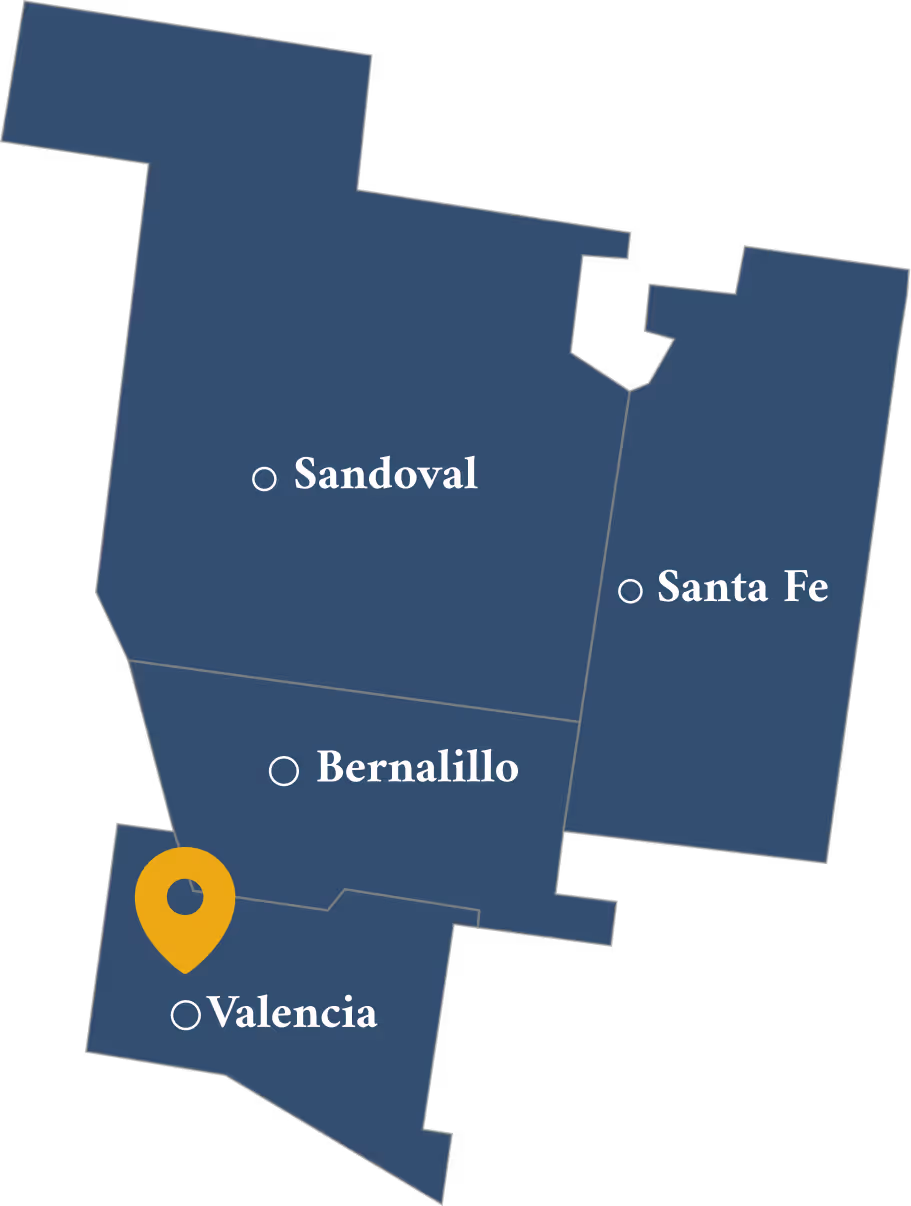
Vanessa Peake represents families throughout Central New Mexico with compassionate family law guidance. No matter where you're located, we're here to help you navigate divorce, custody, and other family law matters.
Bernalillo County - Albuquerque
Sandoval County - Rio Rancho
Santa Fe County - Santa Fe, Los Alamos
Valencia County - Los Lunas
Common Mediation Questions
Do I need an attorney during mediation?
You're not required to have an attorney present during mediation sessions, but many people find it helpful to consult with an attorney before signing final agreements. Your attorney can review mediated terms to ensure they're fair, legally sound, and comply with New Mexico law. Some couples choose to have their attorneys available by phone during sessions to answer questions that arise.
How long does mediation take?
Simple cases with few disputes may resolve in two to three sessions over several weeks. Complex divorces involving substantial assets, business interests, or significant custody disputes may take several months. Most mediations complete faster than expensive, time-consuming litigation, taking weeks or months rather than a year or more that contested court cases often require.
What if we can't agree on everything?
Partial mediation is common and still valuable. You can mediate some issues and litigate others. Even resolving a few disputed matters saves significant time, money, and emotional stress. Many couples successfully mediate financial matters while litigating custody, or vice versa.
Is our mediated agreement legally binding?
Yes. Once you file your mediated agreement with the court and a judge approves it, the agreement becomes an enforceable court order with the same legal weight as a judge's decision after trial. Failure to comply with the agreement may result in contempt proceedings and other enforcement actions.
How much does mediation cost compared to litigation?
Mediation costs vary based on complexity and mediator rates, but they nearly always cost significantly less than contested litigation. Litigation involves extensive attorney time for discovery, motion practice, trial preparation, and court appearances. Mediation streamlines these processes, reducing overall legal expenses. Contact our office for specific fee information for your situation.
Can we use mediation for post-divorce modifications?
Absolutely. Mediation works well for modifying custody arrangements, adjusting parenting time, recalculating child support, or updating spousal support when circumstances change. Returning to mediation preserves your cooperative relationship and costs far less than filing modification motions and litigating changes in court.
What happens during mediation sessions?
Sessions focus on identifying disputed issues, exploring potential solutions, discussing the pros and cons of each option, and reaching agreements both parties can accept. Vanessa keeps discussions productive, ensures both parties have opportunities to express concerns, and helps you work through disagreements. Sessions typically last two to three hours.
Will our mediation discussions be kept confidential?
Yes. New Mexico law protects mediation confidentiality. What you discuss during sessions cannot be used against you if mediation fails and you proceed to court. This protection encourages honest, open discussions without fear that your words will be used as evidence later.
Can mediation work if we really don't get along?
Yes. Mediation doesn't require you to be friends or even particularly cordial. It only requires a willingness to work toward a resolution. Many successfully mediated cases involve couples with significant conflict. The mediator's job is to facilitate productive discussions even when emotions run high.
What's the difference between mediation and collaborative divorce?
Both are alternatives to litigation. Mediation uses one neutral mediator to facilitate agreements. Collaborative divorce involves each party having their own attorney, and sometimes additional professionals, such as financial advisors or child specialists, all committed to reaching a settlement without going to court. Mediation is typically faster and less expensive than collaborative divorce.
Can the mediator give us legal advice?
No. Mediators remain neutral and cannot give legal advice to either party. Vanessa can explain how New Mexico law generally applies to situations like yours and what factors courts typically consider, but she cannot advise what decision you should make. That's why many people consult with their own attorneys before finalizing mediated agreements.
What if we have a prenuptial agreement?
Prenuptial agreements generally control property division, and mediation must respect those terms. However, couples can still mediate issues not covered by the prenup, such as custody arrangements, parenting time, child support, and sometimes spousal support, depending on the prenup's specific terms.

Schedule Your Confidential Consultation
Mediation offers many families a better path through divorce and custody disputes - one that reduces conflict, protects privacy, and keeps control in your hands. Contact our Albuquerque office for a confidential consultation, where Vanessa will listen to your situation, explain whether mediation is a good fit for your case, and help you understand your options moving forward.