
Albuquerque International Child Custody Attorney
Protecting Your Parental Rights Across Borders
.avif)

Bilingual International Custody Representation in Central New Mexico
Peake Law Firm provides advanced legal guidance for international child custody matters throughout Albuquerque and Central New Mexico. As a former legal director for New Mexico's largest domestic violence non-profit, Vanessa Peake brings over 10 years of family law experience and bilingual capabilities to help families facing cross-border custody challenges.
Whether you're concerned about international parental abduction, need to enforce a foreign custody order, or are addressing relocation to another country, our family law firm helps protect your parental rights and your child's well-being across international boundaries.
Types of International Child Custody Cases We Handle
International custody cases involve unique legal challenges when families have connections to multiple countries. Our firm addresses the full range of cross-border custody matters affecting Albuquerque families.
International Parental Child Abduction Cases
Legal representation when one parent takes a child to another country without consent or in violation of custody orders. These cases require immediate action and coordination with federal authorities, foreign courts, and international agencies to secure your child's return.
Hague Convention Cases
The Hague Convention on International Child Abduction is a treaty signed by over 100 countries designed to protect children from wrongful removal across borders. We assist parents filing Hague petitions to secure their child's return to New Mexico or defending against petitions seeking removal from the United States.
International Relocation Disputes
When one parent seeks to permanently relocate a child to another country, New Mexico courts must approve the relocation. We represent parents requesting international moves and those opposing proposed relocations that would disrupt the parent-child relationship.
Cross-Border Custody Agreements
Creating enforceable international parenting plans that address extended travel periods, holiday schedules across time zones, communication through video calls, and financial responsibility for international visits. These agreements require careful drafting to ensure enforceability in multiple jurisdictions.
Enforcement of Foreign Custody Orders
Registering and enforcing custody orders from other countries in New Mexico courts under the Uniform Child Custody Jurisdiction and Enforcement Act (UCCJEA). This process ensures foreign orders receive proper recognition in Bernalillo County and throughout Central New Mexico.
Preventing International Abduction
Implementing protective measures such as travel restrictions, passport surrender orders, supervised visitation, and mirror custody orders in foreign courts to reduce the risk of international parental abduction before it occurs.
Jurisdiction Disputes in International Cases
Resolving conflicts when multiple countries claim authority over custody decisions. These cases require determining the child's "habitual residence" and establishing which country's courts have proper jurisdiction to make custody determinations.
#cta_start
Your Child's Safety Transcends All Borders
International custody cases require immediate attention and experienced representation. As a bilingual family law attorney with deep knowledge of cross-border custody law, Vanessa provides the guidance your family needs to protect your parental rights.
#cta_end
Understanding the Hague Convention on International Child Abduction
The Hague Convention is an international treaty adopted in 1980 that establishes procedures for the prompt return of children wrongfully removed from their country of habitual residence. The Convention does not decide custody, but returns children to their home country, where custody decisions belong, preventing parents from gaining an advantage through international relocation.
What is the Hague Convention
The Hague Convention is an international treaty adopted in 1980 that establishes procedures for the prompt return of children wrongfully removed from their country of habitual residence. The Convention does not decide custody, but returns children to their home country, where custody decisions belong, preventing parents from gaining an advantage through international relocation.
When the Hague Convention Applies
Four conditions must exist: the child must have been habitually resident in a Convention country immediately before removal; the removal must violate custody rights under that country's law; the parent left behind must have been exercising custody rights; and the child must be under 16 years old. Both the country of habitual residence and the country where the child was taken must be signatories to the Convention.
Countries That Have Signed the Hague Convention
Over 100 countries participate, including Mexico, Canada, the United Kingdom, Spain, France, Germany, Australia, and most European and Latin American nations. The full list of signatory countries continues to grow as more nations recognize the importance of protecting children from international abduction.
What Happens in Hague Convention Cases
Proceedings move quickly, as the treaty requires decisions within six weeks when possible. The parent seeking a return files a petition with the Central Authority (the State Department in the United States). Courts focus solely on whether removal was wrongful, not on what custody arrangement serves the child's interests. If a return is ordered, the child returns to their home country, where custody proceedings are held in the proper court.
Defenses to Return Under the Hague Convention
Limited exceptions allow courts to deny a return of the child, including:
- The requesting parent was not actually exercising custody rights.
- The requesting parent consented to the removal.
- More than one year has passed, and the child is now settled in the new country.
- Return would expose the child to grave physical or psychological harm.
- The child objects to returning and has reached an age of maturity, as defined under the treat.
These defenses require substantial evidence, and courts interpret them narrowly.
Cases Involving Non-Signatory Countries
When children are taken to countries that haven't signed the Hague Convention, return becomes significantly more difficult. Alternative legal strategies include working directly with the U.S. State Department, pursuing custody proceedings in foreign courts, seeking assistance through diplomatic channels, and exploring bilateral agreements between nations. These cases require patience, extensive resources, and often involve international legal networks.
How International Custody Cases Work in New Mexico
New Mexico courts apply both state and federal law in international custody matters, creating a framework that respects international agreements while protecting children's connections to their families.
The Uniform Child Custody Jurisdiction and Enforcement Act (UCCJEA)
New Mexico adopted the UCCJEA to determine which state or country has jurisdiction over custody cases. The child's "home state" (where they lived for the six months before filing) generally has jurisdiction. When international elements exist, courts must consider whether a foreign country is the more appropriate forum and whether New Mexico can exercise jurisdiction consistent with international law.
Determining Habitual Residence
"Habitual residence" is the central concept in international custody law, but it's not defined by a specific time period. Courts examine where the family intended to settle, how long they lived in each country, the child's connections to each place, enrollment in school, medical care, extended family relationships, and both parents' intentions. This determination shapes which country's courts have authority.
Emergency Jurisdiction for International Cases
New Mexico courts can exercise temporary emergency jurisdiction when a child is present in New Mexico and faces abandonment, abuse, or urgent need for protection. This jurisdiction allows immediate protective orders even when another country would normally have authority, providing crucial protection while permanent custody arrangements are resolved.
Best Interest of the Child in the International Context
When New Mexico courts do make custody decisions in international cases, they apply the standard “best interest” factors while also considering additional international elements: the child's cultural heritage and language needs; relationships with extended family in both countries; the child's adjustment to communities, schools, and cultural environments; practical realities of international visitation; and both parents' willingness to facilitate the child's relationship with the other parent across borders.
Creating International Parenting Plans
When both parents cooperate, international parenting plans allow children to maintain meaningful relationships with both parents despite geographic distance and cultural differences.
Extended Visitation Periods
International travel costs and school schedules often make short weekend visits impractical. Successful international parenting plans typically include longer visitation blocks: extended summer stays of several weeks or months; significant holiday periods that allow for cultural celebrations in both countries; school-break visits during spring break, winter holidays, and other extended breaks; and alternating years for major holidays when annual visits aren't feasible.
Travel Logistics and Costs
Clear agreements about travel arrangements prevent future disputes: which parent pays for airfare and other travel expenses; who accompanies younger children on international flights; meeting points for exchanges, particularly for families living in different countries; passport possession and renewal responsibilities; and procedures for obtaining travel consent when needed for border crossings.
Communication Across Time Zones
Modern technology enables parent-child contact despite distance, but parenting plans should establish specifics: regular video call schedules accounting for time zone differences; flexibility for spontaneous calls while respecting both parents' time; language considerations if the child is learning both parents' native languages; and backup communication methods when technology fails.
Cultural and Educational Considerations
International families often value preserving cultural heritage and language: provisions that support the child's connection to both cultures; agreements on language education and bilingual development; celebrations of holidays and cultural traditions from both backgrounds; and coordination of religious upbringing when parents practice different faiths.
Modification Procedures
International parenting plans should address how modifications occur when circumstances change: which country's courts have jurisdiction for future modifications; notice requirements when either parent seeks changes; procedures for renegotiating terms as children mature and their needs evolve; and mediation or other dispute-resolution processes before pursuing litigation.
Why Choose Vanessa Peake for Your International Custody Case
Vanessa Peake brings unique qualifications to international custody matters, combining advanced legal knowledge with bilingual capabilities and a genuine understanding of the cultural complexities faced by diverse families.


Schedule Your Legal Consultation
Hear From Families We've Helped




Meet Vanessa Peake - Your International Custody Attorney
Vanessa Peake brings over 10 years of family law experience and a unique background as the former legal director of New Mexico's largest domestic violence non-profit. She has helped hundreds of families through custody disputes, protective order cases, and complex divorce matters with compassion and dedication.
As one of the state's few bilingual family law attorneys, Vanessa serves both English and Spanish-speaking clients throughout Central New Mexico. Her approach balances firm advocacy with genuine care for her clients' emotional wellbeing during difficult transitions.
Former Legal Director, NM Domestic Violence Non-Profit
Bilingual Attorney (English/Spanish)
10+ Years Family Law Experience
Geographic Scope: Serving International Custody Cases Throughout Central New Mexico
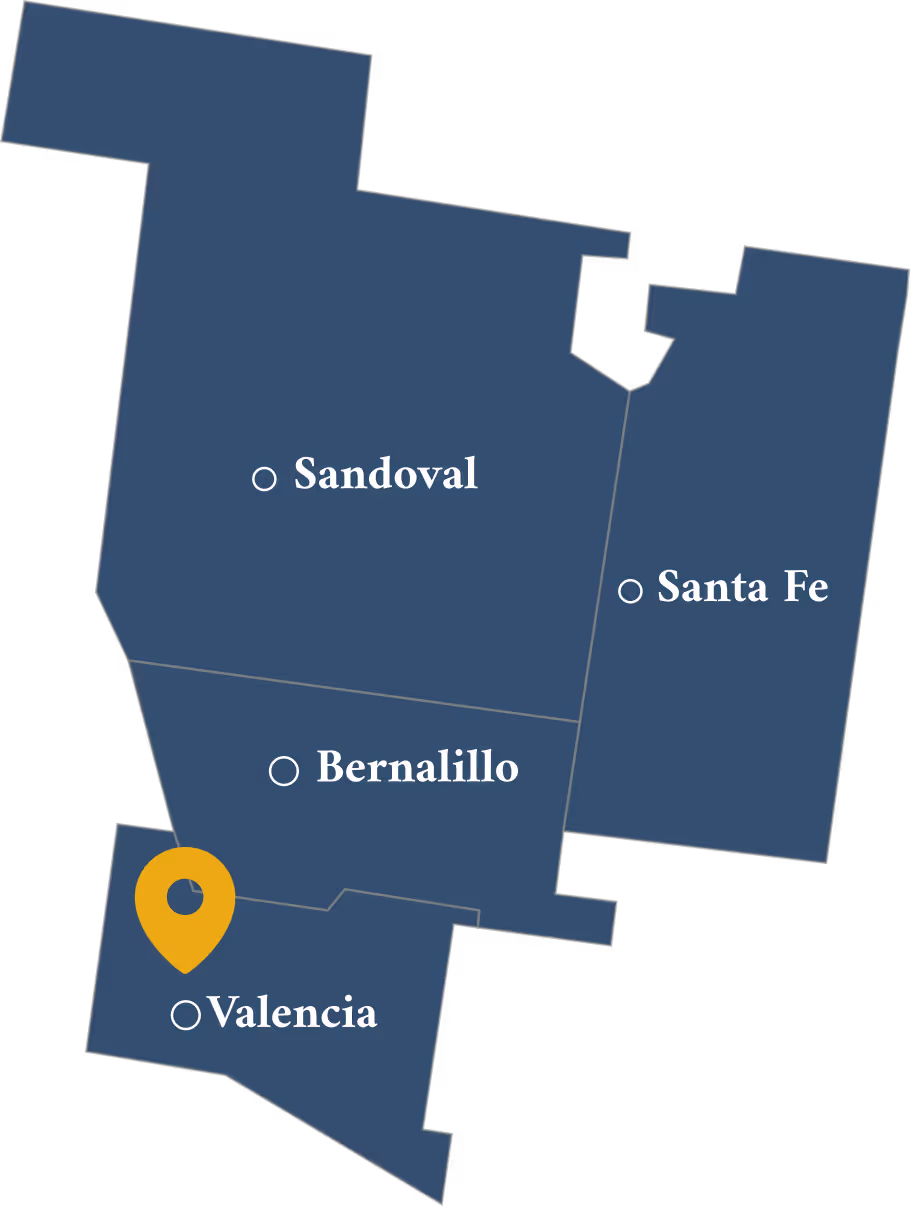
Vanessa Peake represents families in international custody matters throughout Bernalillo County, Sandoval County, Santa Fe County, Valencia County, Torrance County, and Cibola County. While international custody law involves federal courts and foreign jurisdictions, local representation matters for coordination with New Mexico family courts, implementation of protective orders, and enforcement of custody arrangements in Central New Mexico communities.
Bernalillo County - Albuquerque
Sandoval County - Rio Rancho
Santa Fe County - Santa Fe, Los Alamos
Valencia County - Los Lunas
Common International Custody Questions
Can I stop my ex from taking our child to another country?
Yes, if you have custody rights. Courts can issue orders prohibiting international travel without written consent or court permission. If your custody order doesn't address international travel, you can request a modification to add travel restrictions. When immediate danger exists, emergency orders can be obtained quickly to prevent abduction.
What happens if my child is taken to a country that hasn't signed the Hague Convention?
Recovery becomes more difficult but remains possible. You must pursue custody proceedings directly in that country's courts, which requires retaining local counsel and potentially traveling there yourself. The U.S. State Department can provide assistance through diplomatic channels. Some countries have bilateral agreements with the U.S. that provide alternative remedies. These cases typically take longer and require more resources than Hague Convention cases.
How long do Hague Convention cases take?
The treaty aims for a resolution within six weeks, though reality often extends the case. Straightforward cases where facts are clear may resolve quickly. Complex cases involving defenses, evidentiary disputes, or procedural issues can take several months. However, a parent's prompt action can significantly affect the timeline, as cases filed immediately move faster than those filed after a long delay.
Do I need a lawyer in both countries?
Often yes, particularly for Hague Convention cases and enforcement of custody orders. The U.S. attorney files the petition and handles proceedings here, while foreign counsel manages court proceedings abroad. Many attorneys, including Vanessa, work with international legal networks to coordinate representation. The State Department can provide lists of attorneys in foreign countries.
What is "habitual residence" and why does it matter?
Habitual residence determines which country's courts have jurisdiction over custody. It's not based solely on citizenship or a specific time period. Courts examine where the family intended to settle, the child's daily life and routines, connections to the community, and the intentions of both parents. The country of habitual residence is where custody decisions should be made, and Hague Convention cases typically focus on the return of children to that country.
Can my child's passport be held by the court?
Yes. New Mexico courts can order the surrender of passports to prevent international travel. Passports may be held by the court clerk, your attorney, the other parent's attorney, or another neutral party. Courts can also order that you be notified if the other parent applies for a new passport for your child. The State Department's Children's Passport Issuance Alert Program provides additional protection.
What if I want to move permanently to another country with my child?
You must obtain court permission before relocating internationally with your child. New Mexico courts require notice to the other parent and a hearing in which you demonstrate that the move serves the child's interests. Courts consider the reason for the move, the impact on the other parent's relationship with the child, the child's wishes if old enough to express them, and whether a realistic visitation plan exists. International relocations face greater scrutiny than domestic moves.
Does New Mexico recognize foreign custody orders?
Yes, under the UCCJEA. Foreign custody orders can be registered in New Mexico and enforced like domestic orders. The process requires filing the foreign order with a New Mexico court, providing notice to the other parent, and allowing the other parent an opportunity to object. Once registered, the foreign order has the same effect as a New Mexico custody order and can be enforced through contempt proceedings if violated.
What should I do if I suspect my ex might take our child to another country?
Act immediately. Consult with an attorney about obtaining travel restrictions and passport surrender orders. Document your concerns with specific facts supporting the risk. Consider requesting supervised visitation until protective orders are in place. Register your child with the State Department's Children's Passport Issuance Alert Program. If you have joint legal custody, contact the passport agency to request notification of any passport applications. Keep copies of all custody orders, your child's birth certificate, and your child's passport in a secure location.
Can I be charged with international kidnapping if I take my child to another country?
Yes, potentially. Taking a child across borders in violation of custody rights can result in both civil and criminal consequences. The International Parental Kidnapping Crime Act makes it a federal crime to remove a child from the U.S. or retain a child outside the U.S. with the intent to obstruct another parent's custodial rights. Violators face fines and imprisonment. Always obtain court permission or written consent before international travel when custody orders or divorce proceedings are active.

Schedule Your Confidential Consultation
International custody disputes affect your relationship with your child and require immediate legal attention. Contact our Albuquerque office for a confidential consultation where Vanessa will listen to your situation, explain your options under international and New Mexico law, and help you understand the steps necessary to protect your parental rights across borders.