
Albuquerque Restraining Orders Attorney
Immediate Legal Protection for Domestic Violence Victims
.avif)

Compassionate Restraining Order Representation in Central New Mexico
Peake Law Firm provides immediate legal protection for domestic violence victims throughout Albuquerque and Central New Mexico. As the former legal director of New Mexico's largest domestic violence non-profit, Vanessa Peake brings over 10 years of experience helping families secure safety through restraining orders. Whether you need emergency protection, temporary relief, or a permanent order, our bilingual family law firm understands the courage it takes to seek help and provides the compassionate guidance you deserve during this difficult time.
Types of Restraining Orders in New Mexico
New Mexico courts provide several forms of protection orders under the Family Violence Protection Act, each designed to address different safety needs and circumstances.
Emergency Orders of Protection
Immediate protection is obtained through law enforcement after a domestic violence incident. These orders provide rapid intervention when danger is present, lasting up to 72 hours or until the next business day. Police officers can request emergency orders directly from a judge, allowing victims to receive protection without going to court themselves.
Temporary Orders of Protection
Court-issued protection granted based on your written petition, typically the same day you file. These orders remain in effect until your hearing, usually scheduled within 10 days. Temporary orders provide no-contact provisions, residence exclusion, and immediate safety measures while you prepare for your permanent order hearing.
Permanent Orders of Protection
Long-term protection is granted after a court hearing where both parties present evidence. Despite the name, these orders typically last six months to one year but can be renewed. Permanent orders may include provisions for temporary custody, child support, and exclusive use of your residence, addressing both safety and practical family needs.
Civil Restraining Orders
Protection is available when the abuser is not a household member, such as neighbors, coworkers, or acquaintances. These orders follow different procedures from domestic violence orders but provide similar no-contact and stay-away protections through civil court.
#cta_start
You Deserve Safety and Protection
As a former legal director for New Mexico's largest domestic violence non-profit, Vanessa understands what you're facing. Let's discuss how to protect you and your family through the legal system.
#cta_end
How Restraining Orders Protect You and Your Children
Restraining orders provide legally enforceable protection tailored to your specific safety needs. New Mexico courts can order:
No-Contact Provisions
The abuser must have no contact with you in person, by phone, text, email, social media, or through third parties. Any attempt to contact you violates the order and can result in arrest.
Stay-Away Requirements
The abuser must stay a specified distance from your home, workplace, children's school, daycare, or other locations you regularly visit.
Residence Exclusion
The court can order the abuser to immediately leave your shared residence, giving you and your children exclusive use of the home regardless of who owns or leases it.
Temporary Custody Orders
When children are involved, the court can grant temporary custody to you, limiting or eliminating the abuser's time with the children until the situation is resolved.
Temporary Child Support
Courts may order child support as part of the protective order, addressing immediate financial needs while you separate from the abuser.
Firearm Restrictions
Federal and New Mexico law prohibit persons subject to domestic violence restraining orders from possessing, purchasing, or receiving firearms or ammunition
Property Protections
Courts can order the abuser not to damage, hide, or dispose of your property, vehicles, or belongings.
Violating a restraining order is a criminal offense. For a first violation, the abuser faces up to one year in jail and a $1,000 fine. Second violations carry mandatory jail time of 72 consecutive hours and potential felony charges.
When You Might Need a Restraining Order
Recognizing when legal protection is necessary can be difficult, especially when you're in the middle of an abusive situation. You may benefit from a restraining order if you're experiencing:
Physical Violence or Threats
Any act of physical harm, assault, battery, or threats causing you to fear for your safety or the safety of your children.
Severe Emotional Distress
Intentional conduct that causes severe emotional suffering, even without physical violence.
Stalking or Harassment
Repeated unwanted contact, following you, showing up at your home or workplace, or making repeated phone calls that make you feel unsafe.
Property Damage or Threats
Damaging your belongings, vehicle, or home to intimidate or control you.
Safety Concerns During Divorce
When domestic violence emerges during divorce or separation, making it unsafe to proceed without court protection.
Custody Disputes with Abuse
When you need to protect your children from an abusive parent or ensure safe exchange arrangements.
You don't need to have physical injuries or police reports to obtain protection. New Mexico law recognizes that domestic abuse takes many forms, and courts take emotional abuse and threats seriously when determining whether to grant protective orders.
The Process of Obtaining a Restraining Order in Albuquerque
Understanding what to expect can reduce anxiety during an already stressful time. Here's what the restraining order process looks like:
Step 1: Filing Your Petition
Visit the Second Judicial District Court, 400 Lomas Blvd NW, Albuquerque. Go to the second floor, Room 224, Domestic Violence Division. You can file Monday through Friday during two filing windows: 8:30 AM to 10:30 AM or 1:00 PM to 3:00 PM. Bring a valid New Mexico driver's license or state ID.
There are no filing fees for domestic violence victims in New Mexico. You will complete a Petition for Order of Protection describing the abuse or threats you've experienced. Court staff can provide forms, but cannot give legal advice. Having an attorney help you prepare your petition strengthens your case.
Step 2: The Temporary Order
After reviewing your petition, a judge typically grants a temporary order the same day if they find probable cause that domestic abuse occurred. This temporary order takes effect immediately and remains valid until your hearing.
The court provides you with copies of the temporary order - one for your records and one for service on the abuser. The Bernalillo County Sheriff serves the order on the abuser at no cost to you, as required by New Mexico law. The order cannot be enforced until the abuser has been properly served.
Step 3: The Hearing
New Mexico law requires the hearing to be held within 10 days of the temporary order being granted, though court schedules sometimes extend this timeframe. Both you and the abuser receive notice of the hearing date, time, and location.
At the hearing, you present testimony and evidence about the domestic abuse. The abuser has the opportunity to respond and present their side. A Special Commissioner or judge listens to both parties and determines whether, by a preponderance of the evidence (more likely than not), an act of domestic abuse occurred under the Family Violence Protection Act.
Step 4: The Permanent Order
If the court finds domestic abuse occurred, they grant a permanent order of protection. This order typically lasts six months to one year, depending on the circumstances. The order can be renewed before it expires if you still need protection.
The permanent order may include all the protections from the temporary order plus additional provisions for custody, support, or other relief. Keep a certified copy of your order with you at all times. If the abuser violates the order, call 911 immediately.
Why Choose Vanessa Peake for Restraining Orders
Vanessa Peake brings a unique perspective to restraining order cases, setting her apart from other attorneys in Albuquerque.
Restraining Orders in Divorce and Custody Cases
Domestic violence often surfaces during divorce proceedings or custody disputes. When this happens, restraining orders become an important tool for protecting yourself and your children as you resolve family law matters.
Impact on Custody Decisions
New Mexico law explicitly requires judges to consider domestic violence when making custody determinations. Under NMSA § 40-4-9.1, evidence of domestic violence creates a legal presumption against awarding custody to the abusive parent. This presumption protects children from ongoing exposure to domestic violence.
A restraining order becomes powerful evidence in custody cases. While the abusive parent can attempt to overcome this presumption, they must present significant proof that custody would still serve the child's interests - a difficult standard to meet.
Temporary Orders During Divorce
When you file for divorce, New Mexico courts can issue temporary domestic orders that function similarly to restraining orders. These orders can regulate conduct between spouses, establish temporary custody arrangements, prevent disposal of marital assets, and order temporary child support.
If domestic violence is present, combining restraining order protections with temporary divorce orders provides comprehensive safety measures while your divorce proceeds.
Safe Child Exchanges
When a restraining order is in place, but the abusive parent has visitation rights, courts create detailed protocols for safe child exchanges. These may include:
- Exchanges at police stations or other public locations
- Use of a neutral third-party exchange person
- Supervised visitation requirements
- Specific communication methods for co-parenting (such as court-approved apps only)
Vanessa works with you to establish arrangements that protect your safety while complying with court orders regarding parental rights.
Property and Financial Protections
Restraining orders can address immediate financial and property concerns during separation. Courts may grant you exclusive use of the family residence, order temporary child support, prevent the abuser from canceling insurance policies, and prohibit hiding or disposing of marital assets.
These protections provide stability while you address the broader financial issues in your divorce case.
What Qualifies as Domestic Abuse Under New Mexico Law
The Family Violence Protection Act defines domestic abuse broadly to protect victims experiencing various forms of harm. Domestic abuse includes:
- Physical Harm or Assault – Any act causing physical injury, including hitting, pushing, choking, restraining, or use of weapons.
- Threats Creating Fear – Threats that make you reasonably fear imminent bodily injury for yourself or your children.
- Severe Emotional Distress – Intentional conduct causing serious emotional suffering, even without physical violence.
- Stalking – Following you, repeatedly appearing at your home or workplace, or monitoring your activities in ways that cause fear.
- Sexual Assault – Any non-consensual sexual contact or activity.
- Criminal Trespass – Entering or remaining on your property without permission after being told to leave.
- Property Damage – Intentionally damaging your belongings, vehicle, or residence to intimidate or control you.
- Harassment – Repeated unwanted contact through phone calls, texts, emails, or social media that alarms or seriously annoys you.
- Interference with Personal Liberty – Restricting your freedom of movement or preventing you from contacting others.
The abuse must come from a "household member" to qualify for protection orders under the Family Violence Protection Act. This includes current or former spouses, dating partners, co-parents (regardless of whether you lived together), family members, and anyone with whom you've had a continuing personal relationship. You do not need to currently live together to be considered household members.
Schedule Your Confidential Consultation
Hear From Families We've Helped




Meet Vanessa Peake - Your Family Law Attorney
Vanessa Peake brings over 10 years of family law experience and a unique background as the former legal director of New Mexico's largest domestic violence non-profit. She has helped hundreds of families obtain protective orders, leave abusive situations, and secure safety for themselves and their children.
As one of the state's few bilingual family law attorneys, Vanessa serves both English and Spanish-speaking clients throughout Central New Mexico. Her approach combines firm legal advocacy with genuine compassion for families experiencing trauma and transition.
Former Legal Director, NM Domestic Violence Non-Profit
Former prosecutor for the District Attorney
Bilingual Attorney (English/Spanish)
10+ Years Family Law Experience
Serving Families Across Central New Mexico
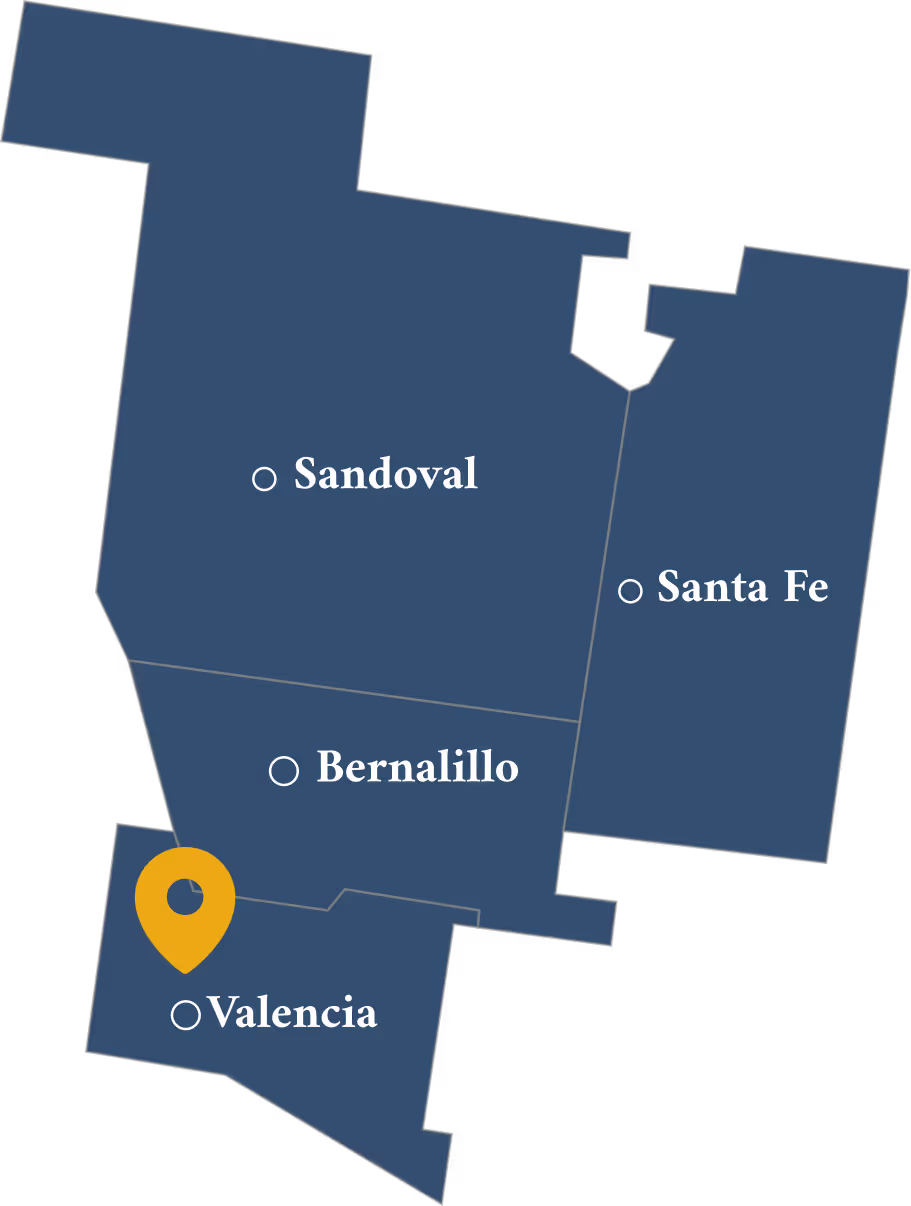
Vanessa Peake represents families in international custody matters throughout Bernalillo County, Sandoval County, Santa Fe County, Valencia County, Torrance County, and Cibola County. While international custody law involves federal courts and foreign jurisdictions, local representation matters for coordination with New Mexico family courts, implementation of protective orders, and enforcement of custody arrangements in Central New Mexico communities.
Bernalillo County - Albuquerque
Sandoval County - Rio Rancho
Santa Fe County - Santa Fe, Los Alamos
Valencia County - Los Lunas
Common Restraining Order Questions
Do I need proof to get a restraining order in New Mexico?
You need to provide credible testimony describing the domestic abuse. While police reports, photos of injuries, medical records, text messages, or witness statements strengthen your case, they're not required. Your sworn testimony describing what happened is evidence the court can consider.
Can I get a restraining order if we're already divorced?
Yes. Restraining orders protect you from abusive former spouses just as they protect people currently married or dating. The Family Violence Protection Act covers former household members, so your legal relationship status doesn't prevent you from seeking protection.
What if the abuser violates the restraining order?
Call 911 immediately. Violating a restraining order is a criminal offense. Police can arrest the abuser for the violation. Keep your certified copy of the order with you at all times so you can show it to law enforcement if needed. Document all violations with dates, times, and details.
Will getting a restraining order affect our divorce case?
Yes, typically in ways that protect you. Restraining orders provide evidence of domestic violence, which affects custody decisions, property division, and spousal support. Courts take domestic violence seriously when making divorce-related determinations.
How long does a restraining order last?
Temporary orders last until your hearing (typically 10 days). Permanent orders usually last six months to one year. If the order includes custody or support provisions, it may last up to six months. You can request renewal before the order expires if you still need protection.
Can a restraining order give me custody of our children?
Yes. As part of a permanent restraining order, courts can grant temporary custody arrangements. These custody orders remain in effect for the duration of the restraining order (typically six months). You may need to file a separate custody case for longer-term custody determinations.
Are restraining orders public record in New Mexico?
Yes, most court orders in New Mexico are public record. However, certain information, like your address, may be kept confidential for safety reasons. Discuss confidentiality concerns with your attorney when filing your petition.
What happens at the restraining order hearing?
Both you and the abuser testify about the alleged domestic abuse. You may present evidence like photos, text messages, medical records, or witness testimony. The abuser can respond and present their own evidence. A judge or Special Commissioner decides whether domestic abuse occurred based on the preponderance of evidence standard.
Do I need a lawyer to get a restraining order?
No, you can file without an attorney. However, having legal representation significantly increases your chances of obtaining the order and ensuring it includes all necessary protections. An attorney helps you prepare compelling testimony, gather supporting evidence, and present your case effectively at the hearing.
Can I drop a restraining order after it's granted?
Dropping a temporary order before the hearing may be possible. Once a permanent order is in place, the protected party can petition to have it dismissed, but this requires filing paperwork with the court. However, if the abuser violates the order, prosecutors may pursue criminal charges regardless of whether you want to drop the order.
What if I'm falsely accused and served with a restraining order?
If you've been served with a restraining order petition, take it seriously. Attend the hearing and present your side of the story with evidence and witnesses. Consider consulting a family law attorney who can help you prepare a defense and protect your rights, especially if custody or other family law matters are involved.

Take the First Step Toward Safety
Seeking help takes courage. You deserve protection, and you deserve an attorney who understands what you're facing. Contact our Albuquerque office for a confidential consultation, where Vanessa will listen to your story, explain your options under New Mexico law, and help you create a plan for your safety and your children's.