
Albuquerque Property Division Attorney
A Clear Path Through Community Property Law


A Bilingual Family Law Attorney Who Protects What You've Built
The property division decides who keeps the house, retirement accounts, business, and the debt left behind. Albuquerque property division attorney Vanessa Peake helps clients identify, value, and divide marital assets and debts under New Mexico law. She has deep experience using her psychology background and training in deftly handling difficult family disputes and negotiations. Combined with years of running the legal side of New Mexico's largest domestic violence nonprofit, she saw firsthand how money gets used as leverage in a marriage.
Fluent in English and Spanish, Vanessa favors mediation first and litigates when a spouse won't negotiate honestly. As a property division lawyer in Albuquerque, she handles disputes involving real estate, retirement accounts, businesses, separate property, and marital debt. Whether your case involves one shared bank account or a business, several properties, and retirement accounts held in multiple states, our team's approach stays the same: find everything, value it right, fight for your share.
How New Mexico Divides Marital Property

New Mexico is a community property state. Most property and debt acquired during the marriage is considered community property under New Mexico law, subject to specific exceptions. Income, real estate, retirement contributions, business growth, and most debt belong to both spouses equally under state law, regardless of whose name sits on the account or the title.
But equal doesn't mean identical. Courts rarely split every single item exactly down the middle. Instead, the court generally looks at the overall division of the community estate rather than splitting every individual asset in half. For example, one spouse might keep the house while the other keeps a larger share of retirement funds.
Community property vs. separate property:
- Community property: Income, real estate, retirement contributions, and debts incurred during the marriage.
- Separate property: Assets owned before the wedding, individual gifts, and inheritances.
- Commingled property: Separate and community funds or assets that have been mixed together and may require tracing to determine their character.
- Agreements: Property addressed in a valid prenuptial or postnuptial contract.
When an Albuquerque Property Division Lawyer May Be Needed
Some divorces involve a fairly straightforward split. Others involve assets that are harder to value, trace, or divide. Vanessa works with financial professionals when an Albuquerque property division case involves complex or disputed assets.
High-Value Real Estate
A family home, rental property, or land can represent a substantial part of the marital estate. Fair division of real estate often requires a current appraisal, not a guess based on what the property was worth years ago.
Business Ownership and Professional Practices
A private practice, a small business, or a partnership interest built during the marriage counts as community property, even if only one spouse ran it day to day. A correct business valuation usually requires a forensic accountant or valuation professional, not just a look at the bank statements.
Retirement Plans and Pensions
The marital portion of 401(k)s, pensions, and other retirement benefits may be subject to division. Some employer-sponsored plans require a Qualified Domestic Relations Order (QDRO) to complete the transfer.
Assets Held Outside New Mexico or Abroad
Property, accounts, or business interests located in another state or country can add jurisdictional, valuation, and documentation issues to the case. Vanessa's background handling cross-border family law matters carries over to tracking and addressing assets that don't sit neatly inside New Mexico's borders.
Significant Marital Debt
Credit card balances, mortgages, and other debts incurred during the marriage may be treated as community obligations, although exceptions can apply depending on how and why the debt was incurred.
Property Acquired Before the Marriage
Assets owned before the marriage are generally treated as separate property, but community contributions, retitling, or mixed funds can create additional property and reimbursement issues that must be traced.
Suspected Hidden or Undisclosed Assets
A spouse who moves money, delays disclosure, or downplays income creates a problem that requires financial records, subpoenas, and sometimes a forensic accountant to resolve.
#cta_start
Don't Sign Away Your Share
Once a property settlement is finalized, undoing it is difficult. Speak with Albuquerque property division attorney Vanessa Peake before agreeing to terms that affect your home, retirement, business interests, or debt.
#cta_end
How Our Albuquerque Property Division Attorney Handles the Process
Full Financial Disclosure
Both spouses submit a complete picture of income, assets, and debts. Incomplete or inaccurate disclosure can lead to additional discovery, disputes, and delays.
Community and Separate Property, Sorted
Every asset and debt gets sorted into community or separate, with commingled property requiring a closer look at how and when funds moved.
Valuing Major Marital Assets
Real estate, businesses, and retirement accounts often need a professional appraisal or valuation before a fair number exists to negotiate around.
Settlement Negotiations or Mediation
Most property division cases resolve without a trial. Mediation keeps the decision in the spouses' hands and typically costs less, in money and stress, than litigation.
Court Review When Agreement Isn't Possible
If the spouses cannot reach an agreement, the court determines which assets and debts are community or separate property and enters orders dividing the marital estate under New Mexico law. Fault or infidelity generally doesn't factor into the outcome.
Title Transfers and Account Divisions
A signed order isn't the finish line. Deeds get retitled, beneficiary designations get updated, and QDROs get filed with retirement plan administrators.
Enforcement If an Order Isn't Followed
When a spouse refuses to transfer a title, sign paperwork, or hand over funds owed under the order, the court can compel compliance. Property division orders are difficult to modify once finalized, which is why getting the terms right the first time and enforcing them when needed matters as much as the original negotiation.
Protecting Your Financial Interests During Divorce

Gather Financial Records Early
Bank statements, tax returns, retirement statements, and property deeds are far easier to collect before a case gets contentious than after.
Avoid Moving or Hiding Assets
Transferring money to a separate account, or a "gift" of assets to family right before filing, looks exactly like what it is, and courts notice.
Keep Separate Property Separate
Don't deposit inheritance money into a joint account or use marital funds to renovate a home you owned before the marriage unless you're prepared for that asset to become shared property.
Don't Sign Anything Without Legal Review
A settlement offer that looks reasonable on the surface can leave out tax consequences, retirement issues, or debts that outlast the marriage. Vanessa reviews proposed property division terms before clients commit to a final agreement.
Use Reliable Values for Major Assets
Real estate, businesses, and other high-value property may require an appraisal or financial valuation before settlement.
Consider the Tax Consequences of Each Asset
A $200,000 retirement account and $200,000 in home equity aren't worth the same amount after taxes. The number on paper isn't the whole story.
Stay Current on Shared Debts During the Case
Missed payments on jointly held accounts during the divorce hurt both spouses' credit, regardless of who's ultimately responsible for the balance.
Think Long-Term, Not Just About the Settlement Day
A property settlement should account for future expenses, taxes, retirement needs, and the cost of maintaining major assets. If spousal support is also part of your case, you usually need to weigh the two issues together, not settle them one at a time.
What Property Division Can Cost You
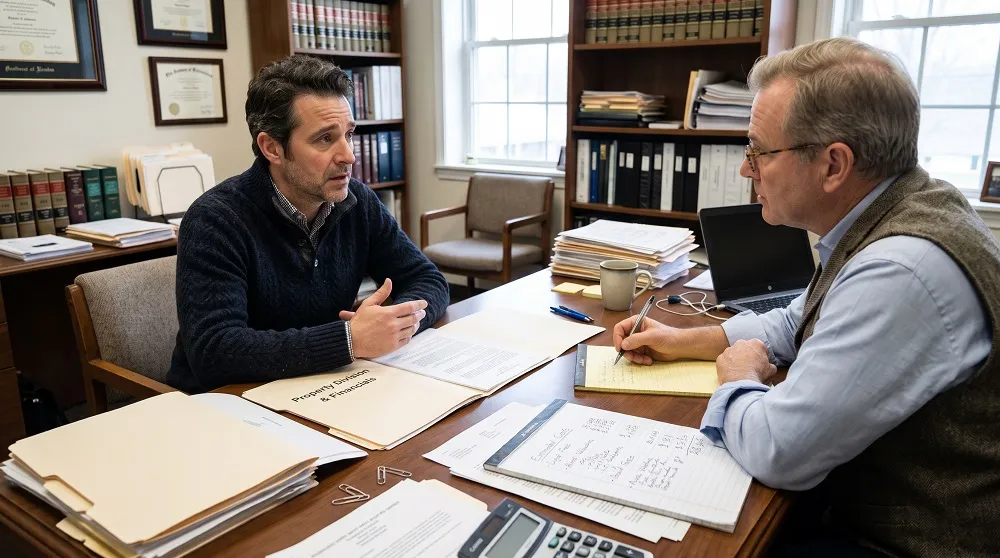
Where the costs come from:
- Appraisers for real estate, businesses, and personal property;
- Forensic accountants when assets need tracing or income needs verifying;
- QDRO preparation fees for dividing retirement accounts;
- Court costs if a case can't settle without a hearing.
Spending now to protect what's ahead:
A skipped valuation meant to save a few hundred dollars can cost far more later: an undervalued business or an improperly divided pension can mean losing tens of thousands of dollars that a court would otherwise have protected.
What happens without proper valuation:
Inaccurate valuations can leave one spouse accepting property or debt on terms that do not reflect its actual financial value. Once signed, that imbalance is hard to undo.
How Vanessa Peake Approaches Property Division Cases
Find Out What You're Owed Before You Sign
Hear from Families We've Helped




Meet Vanessa Peake — Your Family Law Attorney
Vanessa Peake has spent over a decade practicing family law in New Mexico, with her work shaped early on by her time leading the legal team at New Mexico's largest nonprofit serving domestic violence survivors. Combined with her psychology education and training, she continues to inform her work in family-law matters involving financial disputes, domestic violence, and unequal access to marital resources.
Vanessa provides family law representation in both English and Spanish. Clients who hire her as their property division attorney in Albuquerque receive direct support whether the case involves a modest estate or businesses, real estate, and retirement assets spread across multiple accounts.
Former Legal Director, NM Domestic Violence Non-Profit
Bilingual Attorney (English/Spanish)
10+ Years Family Law Experience
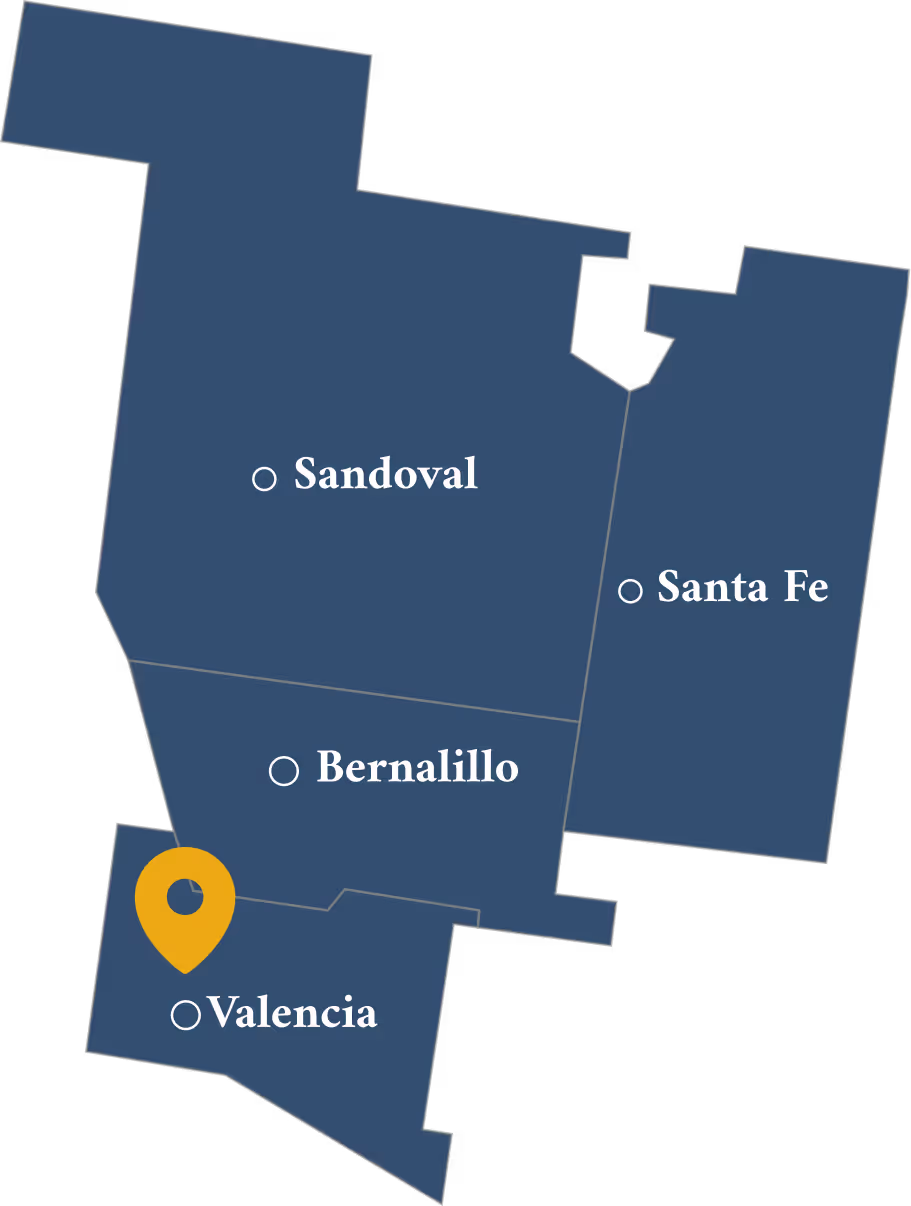
Property Division Support Across Central New Mexico
Peake Law Firm represents Albuquerque clients in property division matters, as well as throughout Central New Mexico in divorce-related financial disputes.
Bernalillo County — Albuquerque
Sandoval County — Rio Rancho
Santa Fe County — Santa Fe, Los Alamos
Valencia County — Los Lunas
Common Property Division Questions
Can I keep the house if my name isn't on the mortgage?
Possibly. Whose name is on the loan does not determine ownership. Our experienced Albuquerque property division attorney can review when the home was acquired, how it was paid for, and whether separate or community funds contributed to it.
Do I owe taxes on property I receive in a divorce settlement?
Generally no. Transfers of property between spouses as part of a divorce are typically tax-free at the time of transfer under federal law, though a later sale may create tax consequences based in part on the asset’s tax basis and the circumstances of the sale.
If my spouse hid assets, can the court make them cover the cost of finding them?
Often yes. When one spouse's concealment forces the other to hire a forensic accountant or investigator, judges can shift some or all of that cost onto the spouse who hid the assets.
What if my spouse wasted marital money on an affair, gambling, or reckless spending before the divorce?
New Mexico courts can account for marital waste, sometimes called dissipation, by awarding the other spouse a larger share of what's left to offset money spent outside the marriage.
How long does a contested property division case typically take?
Timelines vary based on how many assets need valuation and how cooperative both spouses are, but contested cases involving businesses or multiple properties commonly take several months to resolve.

Know What You're Walking Away With
The decisions you make about your assets now don't just close out a case, but can shape your finances for years. Sit down with Vanessa to review what you own, what you owe, and how different settlement terms could affect your finances.